
The World Federation for Mental Health envisions a world in which mental health is a priority for all people. Public policies and programs reflect the crucial importance of mental health in the lives of individuals.

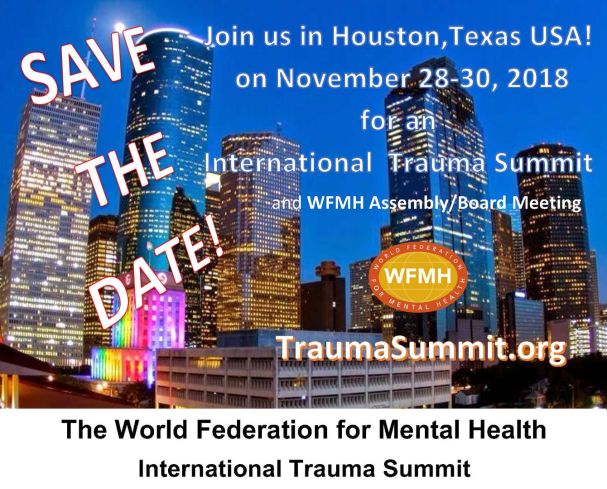
Click Picture for more information!
President of India inaugurates 21st World Congress of mental health, calls for fighting stigma
The President of India, Shri Ram Nath Kovind, inaugurated the 21st World Congress of Mental Health being organised by the World Federation for Mental Health in partnership with Caring Foundation and other institutions in New Delhi today (November 2, 2017). Speaking on the occasion, the President said that the World Congress of Mental Health is taking place in India for the first time. And it has come here at an appropriate moment. Mental health issues are acquiring a serious magnitude in our country. Our National Mental Health Survey 2016 found that close to 14 per cent of India’s population required active mental health interventions.
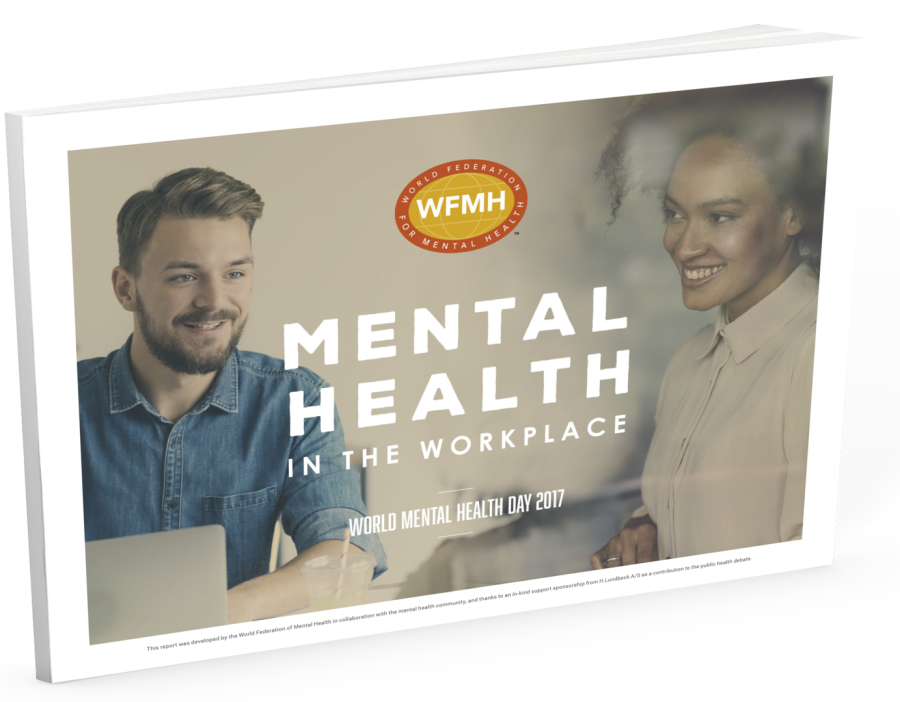
2017 World Mental Health Day Publication
The World Mental Health Day Publication of Mental Health in the Workplace is now available in English, Spanish, Hindi and Tamil.

Visionary Report on Mental Health
June 6, the UN Special Rapporteur on the Right to Health presents his visionary report on mental health to countries at the Human Rights Council (report available in several languages including Spanish, French, English, Arabic and others. Click here for access to report).
The report provides an important framework and road map for mental health that responds to people’s needs, respects their rights and ensures that the dignity of every person is respected.

WMHDAY 2018
World Mental Health Day will focus on Young People and Mental Health in a Changing World.

WHO Mental Health Gap Action Programme (mhGAP)
Mental, neurological, and substance use disorders are common in all regions of the world, affecting every community and age group across all income countries. While 14% of the global burden of disease is attributed to these disorders, most of the people affected - 75% in many low-income countries - do not have access to the treatment they need.
The WHO Mental Health Gap Action Programme (mhGAP) aims at scaling up services for mental, neurological and substance use disorders for countries especially with low- and middle-income. The programme asserts that with proper care, psychosocial assistance and medication, tens of millions could be treated for depression, schizophrenia, and epilepsy, prevented from suicide and begin to lead normal lives– even where resources are scarce.
The link below will also take you to resources, reports and the mhGAP newsletter. The information is to help reduce the mental health treatment gap.
World Federation for Mental Health
PO BOX 807
Occoquan, VA 22125 USA
info@wfmh.com
World Federation for Mental Health, Woodbridge, Virginia, 22192 USA
 Print
Print 