It was the first Director-General of the World Health Organization (WHO) who suggested that the World Federation of Mental Health (WFMH) be created. George Brock Chisholm, a Canadian psychiatrist, envisaged the WFMH as an international, nongovernmental body to provide a link to ‘grassroots’ mental health organizations and United Nations agencies. A radical thinker, Chisholm’s view that “health is a state of complete physical, mental and social wellbeing and not merely the absence of disease or infirmity” provided early direction for both the WHO and the WFMH.
Brief History
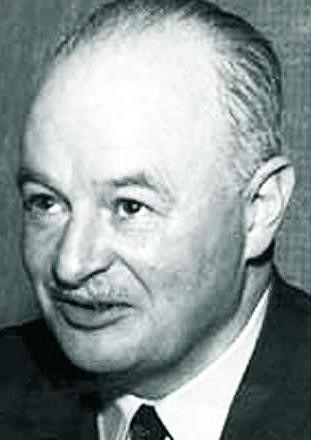 George Brock Chisholm
The world was sick, and the ills from which it was suffering were mainly due to the perversion of man, his inability to live at peace with himself. – George Brock Chisholm
Chisholm’s close friend, John Rawlings Rees, a British military psychiatrist and a founder of the renowned Tavistock Clinic, accepted the challenge. Resigning from the clinic to organize the 3rd International Congress of Mental Hygiene, in 1946, Rees traveled to New York to meet with the congress parent sponsors, the International Committee for Mental Hygiene (ICMH).
The original purpose of the ICMH was mental hospital reform. Clifford Beers, a former psychiatric patient, who had suffered dehumanizing treatment and abuse within mental institutions, founded the National Committee for Mental Hygiene in 1910 and the ICMH in 1919. In the aftermath of WWII, the new ICMH board recognized the need for advocacy in mental health, beyond that of raising standards of care for the mentally ill.
In 1947, the ICMH agreed to change their name to the WFMH and accept as a new purpose to promote among all peoples and nations the highest possible level of mental health in its broadest biological, medical, educational, and social aspects. The lead architects of this vision were Rees and Chisholm, together with eminent psychiatrists George Stevenson, Clarence Hincks, Arthur Ruggles and Harry Stack Sullivan, and noted anthropologist Margaret Mead.
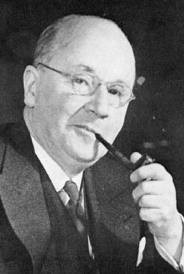 Dr. Jack Rees
In preparation for the congress and to reach out to the societies who would later become WFMH members, Rees hosted a meeting of 26 academics representing a wide range of disciplines and nationalities. Dr. Margaret Mead described the meeting thusly: Never before has so informal, so simple and so fruitful an organizational scheme been tried with individuals working to communicate with the others instead of covering themselves for the folks back home. These discussions were later published as “Mental Health and World Citizenship’ and provided the core principles of the WFMH.
The Resolution to found WFMH began with a meeting in the British Ministry of Health building during the London Congress on the night of 18 August and completed on the night of 19 August 1948. Dr. Jack Rees announced the resolution at a plenary session of the Congress the following day and was ratified by the official Congress delegates on 21 August.
The Federation began with members, ‘not of individuals or countries, but of societies’ from 46 countries. Today, with members and contacts in over 150 countries, the founding principles of the WFMH still hold true and are reflected in current WFHM activities including World Mental Health Day, the Biannual World Congresses, WFMH Collaborating Centers and ongoing initiatives to improve awareness and remove prejudice about mental disorders.
The countries represented by voting delegates were
| Argentina Brazil Chile Denmark France Hong Kong Iran Mexico Norway Portugal Switzerland United States of America |
Australia British Guiana China Egypt Great Britain Hungary Italy Netherlands East Indies Pakistan Puerto Rico Syria |
Austria Bulgaria Cuba Eire Greece Iceland Luxembourg Palestine Siam Turkey Uruguay |
Belgium Canada Czechoslovakia Finland Holland India Malta New Zealand Poland Sweden Union of South Africa Venezuela |
The First Officers of the Federation
| President | Dr. John Rawlings Rees (Great Britain) Consultant, Tavistock Clinic |
| Vice President | Andre Repond, MD (Switzerland) President, European Committee for Mental Hygiene and The Swiss National Committee for Mental Hygiene |
| Treasurer | Frank Fremont-Smith, MD (United States of America) Josiah Macy, Jr. Foundation |
| Honorary Secretary | Kenneth Soddy, MD (Great Britain) Medical Director, National Association for Mental Health (GB) |
Other Publications about the WFMH History
 Click on Picture to open current Issue
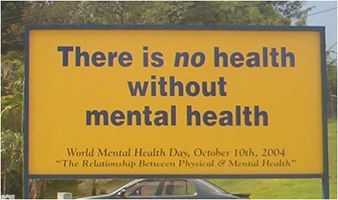
Latest News
WMHDAY 2018 will focus on Young People and Mental Health in a Changing World!
Contact Us
World Federation for
Mental Health
PO BOX 807
Occoquan, VA 22125
USA
Email:
info@wfmh.com
Or use our contact form.
 Share
Share Print
Print 